
Chưa phân loại
Paper Straws in Hamburg: A Port City Confronts Marine Plastic Pollution

As Germany’s largest port and one of Europe’s busiest shipping hubs, Hamburg carries a distinctive relationship with plastic pollution that shaped how the city approached its mandatory transition to paper straws. Unlike inland cities where the straw ban was primarily an abstract regulatory requirement, Hamburg’s identity as a maritime city gave the policy immediate, visible relevance tied to the health of its harbor and the wider North Sea.
Hamburg’s transition followed the same nationwide EU-mandated timeline detailed in our related article on paper straws Germany.
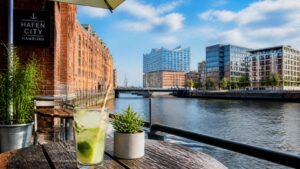
The Elbe River and Harbor Context
Hamburg’s location along the Elbe River, connecting the city to the North Sea, has long made marine debris a tangible local concern rather than a distant environmental abstraction. Local environmental groups have periodically documented plastic waste, including straws, accumulating along harbor areas and riverbanks, giving Hamburg’s paper straw transition a more immediate environmental narrative than in cities without direct waterway exposure.
Hamburg’s F&B Scene and the Straw Ban
| District | F&B Character | Straw Transition Notes |
|---|---|---|
| HafenCity | Modern waterfront dining, tourism-focused | Early, highly visible adoption |
| St. Pauli | Nightlife, bars, Reeperbahn district | Mixed pace, high-volume venues |
| Schanzenviertel | Indie cafés, alternative culture | Early adopter, sustainability-branded |
| Speicherstadt | Historic warehouse district, tourist cafés | Steady, tourism-driven adoption |
Harbor Tours and Waterfront Dining
Hamburg’s popular harbor boat tours and waterfront restaurants along the HafenCity development have leaned into sustainability messaging as part of their broader appeal to environmentally conscious tourists, many of whom specifically visit Hamburg to experience its maritime heritage and modern harbor architecture. Paper straws served aboard harbor cruise vessels and at waterfront cafés have become a small but consistent detail reinforcing this environmentally-aware visitor experience.
Fish Market Culture and Traditional Beverage Service
Hamburg’s famous Fischmarkt, the historic Sunday fish market held along the harbor since the 17th century, has traditionally featured simple beverage service — including the popular Hamburger specialty Fischbrötchen paired with beer or soft drinks — with limited straw dependency historically, similar to patterns seen in other traditional European food markets where direct-from-container drinking remains common.
The Reeperbahn’s Nightlife Adaptation
St. Pauli’s Reeperbahn district, one of Europe’s most famous nightlife strips, faced adaptation challenges similar to those documented in other major German nightlife districts, given the sheer volume of drinks served across its dense concentration of bars and clubs. Venue operators in this district reported needing substantial paper straw stock to handle weekend crowds, particularly during Hamburg’s warmer months when outdoor and rooftop bar seating drives significant additional beverage volume.
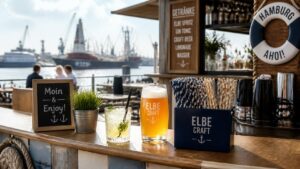
Hamburg’s Environmental Advocacy Community
Hamburg is home to a number of active environmental and marine conservation organizations, given its maritime identity, and several have used the national straw ban as an entry point for broader public engagement around plastic pollution in the North Sea and Baltic Sea regions. These organizations have periodically organized harbor and riverbank cleanup events, using visible plastic debris — straws included — as a tangible symbol connecting individual consumer choices to the health of Hamburg’s waterways.
Comparing Hamburg to Germany’s National Straw Story
While Hamburg’s paper straw transition followed the same national EU-mandated timeline as the rest of the country, detailed further in our overview of Germany’s regulatory approach, the city’s maritime identity gave the policy a distinctly local resonance not always present in Germany’s inland cities, connecting an abstract EU directive to Hamburg’s very tangible relationship with its harbor and surrounding waterways.
Corporate Sustainability in Hamburg’s Shipping Industry
As home to major shipping and logistics companies, Hamburg’s corporate business community has generally shown strong engagement with environmental sustainability messaging, given the shipping industry’s own scrutiny over environmental impact. This corporate culture has, in some cases, extended informally to F&B businesses serving Hamburg’s substantial business travel and corporate event market, with several venues near the city’s commercial district voluntarily exceeding minimum straw ban compliance through additional sustainability certifications.
Frequently Asked Questions
Why does Hamburg’s straw ban carry extra environmental significance? As Germany’s largest port city, Hamburg’s direct connection to the Elbe River and North Sea gives plastic pollution concerns, including straws, more immediate local relevance than in inland German cities.
Do Hamburg’s harbor tours use paper straws? Yes — waterfront restaurants and harbor cruise operators have generally embraced paper straws as part of broader sustainability messaging aimed at environmentally conscious tourists.
Does the Reeperbahn nightlife district use paper straws? Venues in this high-volume nightlife district have adapted to the national ban, though some initially faced logistical challenges managing straw supply during peak weekend crowds.
A City Where Policy Meets Place
Hamburg’s experience with Germany’s paper straw ban illustrates how a nationwide regulation can take on distinctly local meaning depending on a city’s geography and identity. For a port city built around its relationship with water, the shift away from plastic straws became more than a compliance requirement — it became a small, visible piece of Hamburg’s broader, ongoing story of stewardship over the harbor and waterways that have long defined the city’s character and economy.